Peru began as a convergence. I flew in from Hong Kong; Dad, my brothers, and the rest of the party came from the UK. The occasion was Dad’s sixtieth, which seemed to require something more ambitious than lunch and a cake. Mum declined the four-day hike after considering the likely toilet arrangements. This proved to be an informed decision.
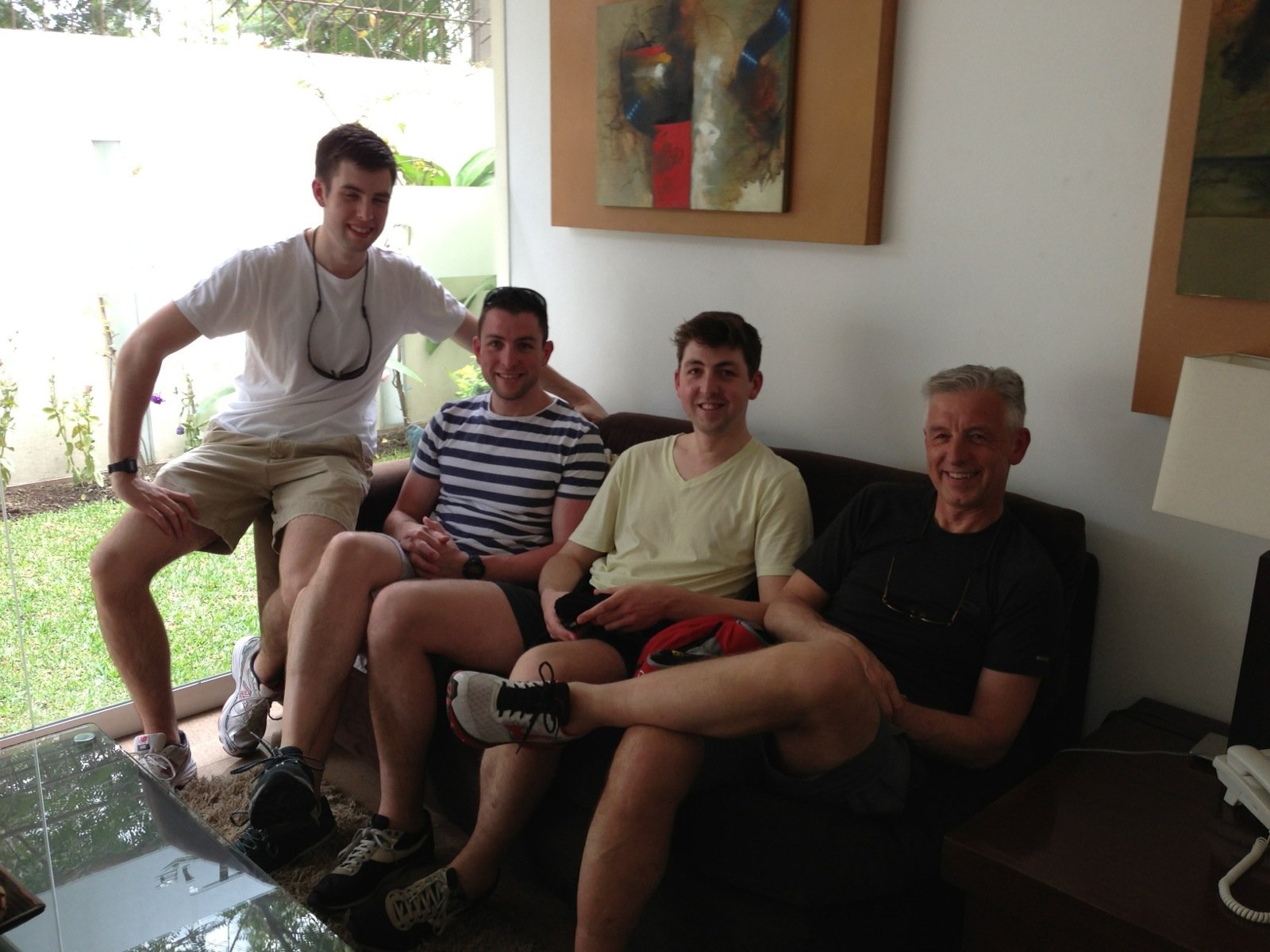
Lima was our first adjustment. It moved between ancient and modern without much warning: a pre-Columbian pyramid surrounded by roads and apartments, then cafés, shops, and the polished city centre. Dad looked around the shopping district, thought of Liverpool One, and renamed it Lima One. The name held.
From there, the country began to rise. In Cusco, the altitude made itself known before the Inca Trail had properly started. Running between two hills for a photograph left me with tingling lips and the taste of blood in my mouth. The air still held oxygen, of course; it was simply less inclined to surrender it. Every flight of steps became a small negotiation.
That changed the pace of the journey. The Andes would not be hurried, and there was something appropriate in that. In the Inca understanding of the world, the mountains were not scenery. They were apus: presences, protectors, and gods. Pachamama was not an abstract appreciation of nature but the earth beneath each footstep, capable of sustaining life and deserving an offering in return.
The trail made the idea physical. Paths followed the folds of the land. Terraces held to slopes that looked too steep to support anything. Water was redirected from the mountains through channels and fountains, not merely for use but as part of a relationship between sun, water, earth, and people. At Wiñay Wayna, the terraces seemed stacked into the valley, irrigated with an intelligence that was practical, beautiful, and hundreds of years ahead of our habit of treating landscape as an obstacle.
The Inca did not arrive, flatten the ground, and place a monument on top. They found the rock that was already there and continued it.
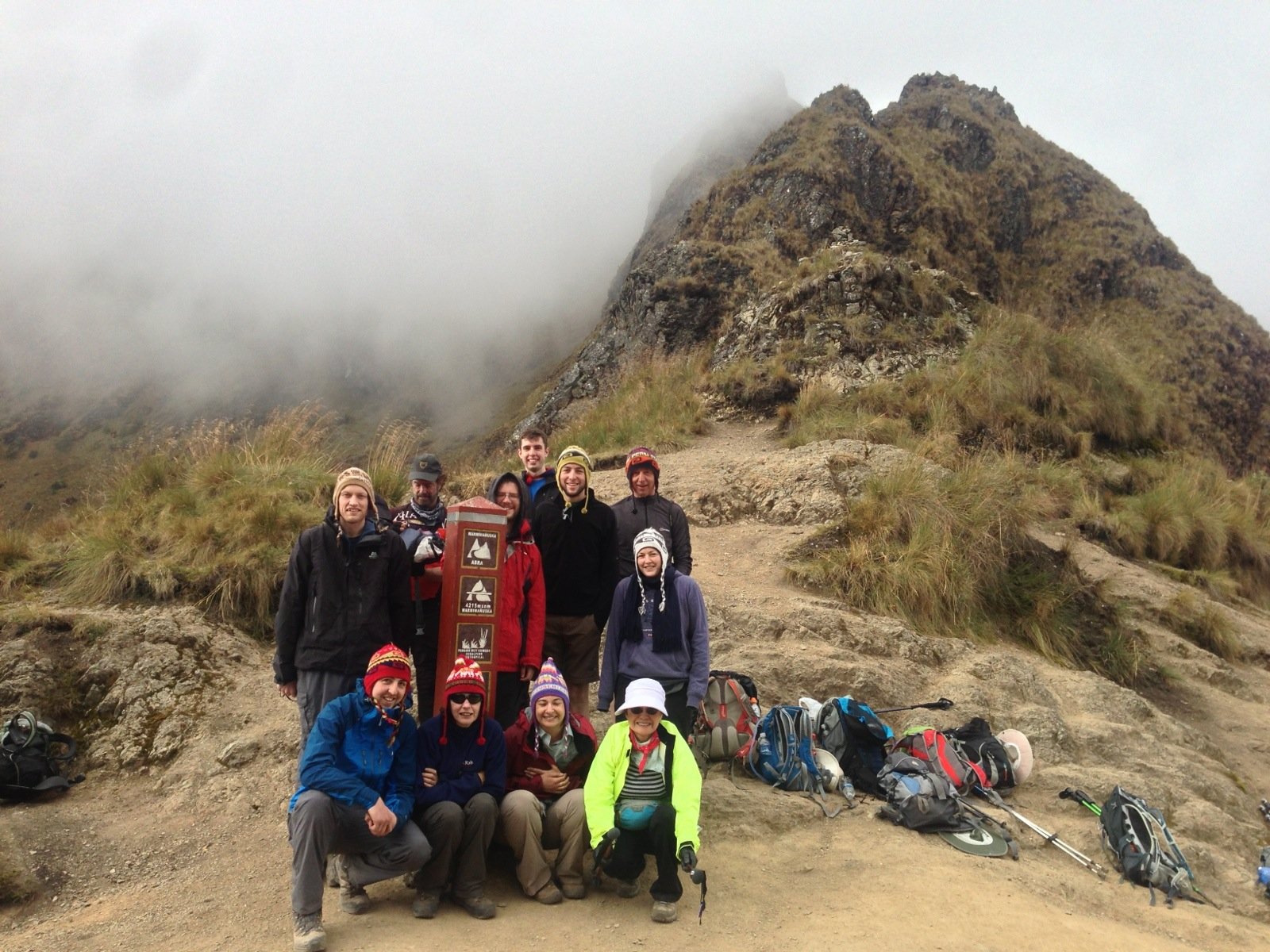
We had four days to absorb that lesson, mostly while climbing. The highest point was Warmiwañusca, Dead Woman’s Pass, at 4,234 metres. The final steps were steep, the cloud sat low, and every breath felt rationed. Young, our Korean-American companion, was in her eighties and walking the same trail. There was nothing performative about her progress. She simply kept going, steady and composed, which removed most of the excuses available to those of us several decades younger.
Our porteadores — the Peruvian porters who carried the camp and kitchen along the trail — were extraordinary. They moved past us at a pace that made the gradient appear negotiable, then somehow had tents ready and a meal underway before we arrived. Breakfast, lunch, and dinner appeared each day wherever we happened to be. Not packets reluctantly opened beside a stove, but proper food: soup, vegetables, pancakes, bread, and three-course meals produced on a mountainside.
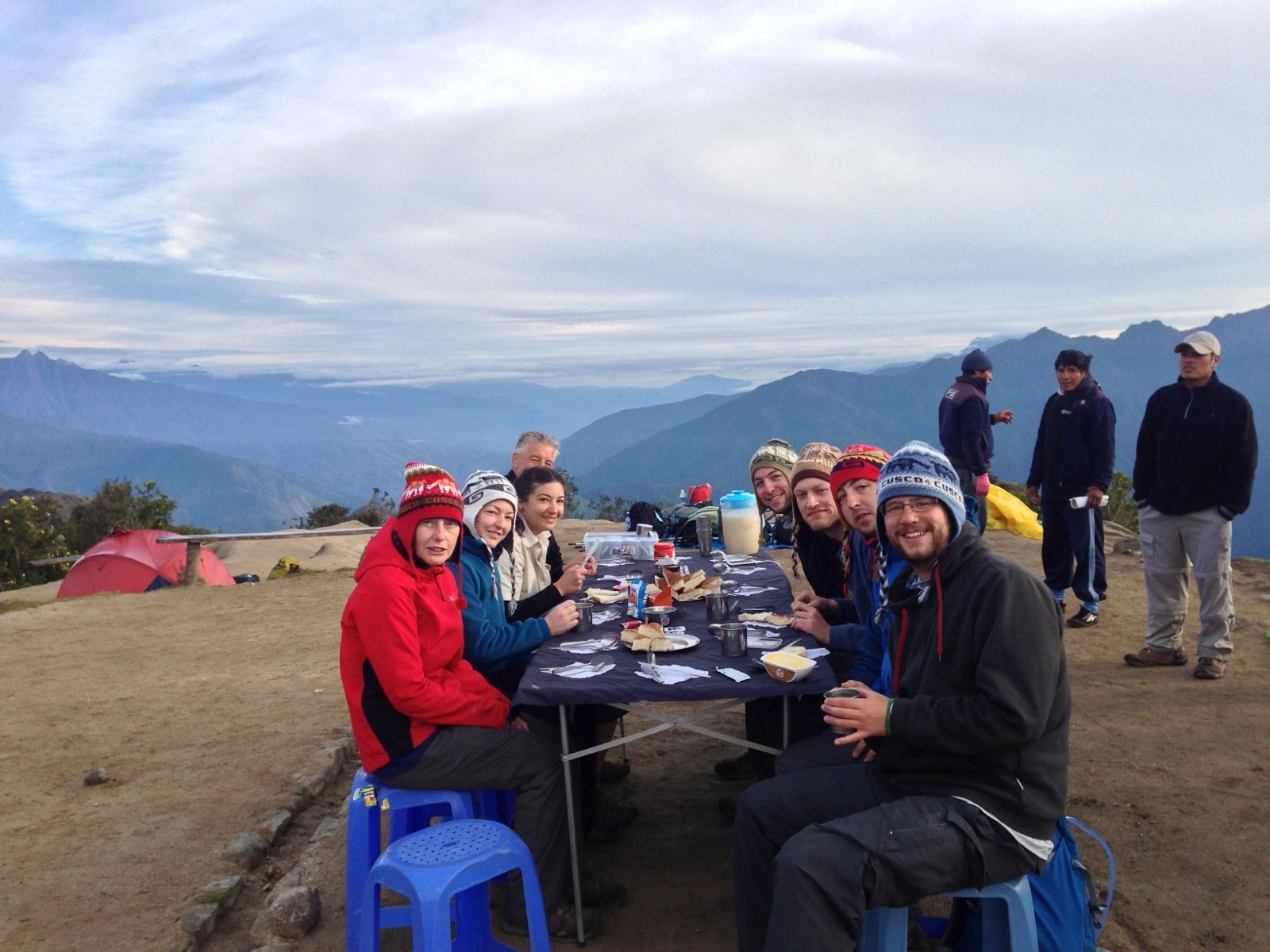
There was even a cake.
Dad’s sixtieth was celebrated at 3,679 metres, after a three-course dinner, with a birthday cake that had travelled farther and more carefully than many people’s hand luggage. The dining tent also became the arena for an increasingly serious game of UNO. Rules were clarified, allegiances formed and dissolved, a tracking spreadsheet appeared, and the porters watched a group of mad gringos turn a family card game into international arbitration. Perhaps it was the altitude. Perhaps it was simply us.
Outside the tent, the stars were astonishing. With the lights gone and the mountains reduced to black edges, the sky seemed closer, clearer, and much less decorative than it did at home. I wrote that I wished I could remember the names of the constellations, and that there was too much beauty on this planet, and in this universe, not to explore more of it. I still think that was the more important part of the journey.
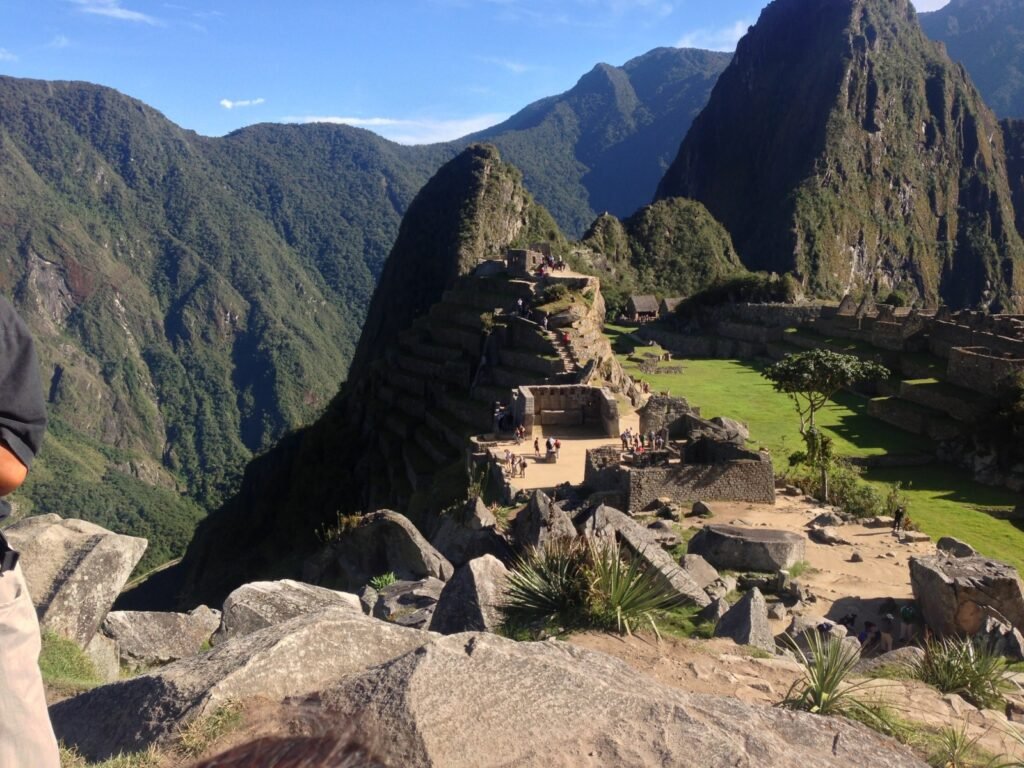
By the time we reached Intipunku, the Sun Gate, the trail felt less like a route to Machu Picchu than part of the site itself. The cobbled path carried us through the gate, and the city appeared below, held between mountains.
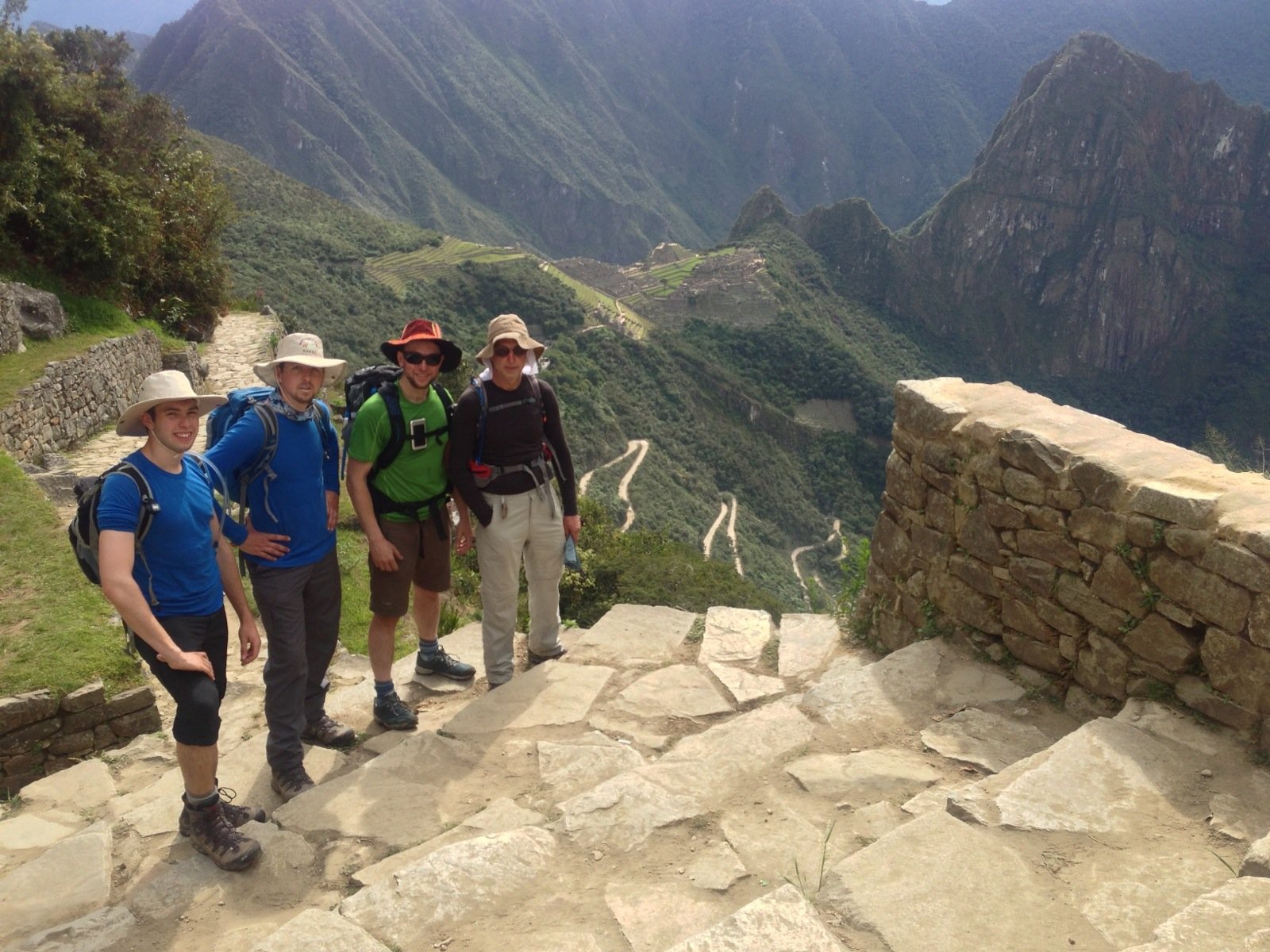
Machu Picchu is often photographed as though it were an object placed in a landscape. Standing there, it was impossible to see it that way. The terraces repeated the contours of the mountain. Walls met natural rock and continued its line. Sacred stones echoed the profiles of peaks beyond them. Architecture, agriculture, water, religion, and astronomy had not been separated into different departments. They belonged to the same place.
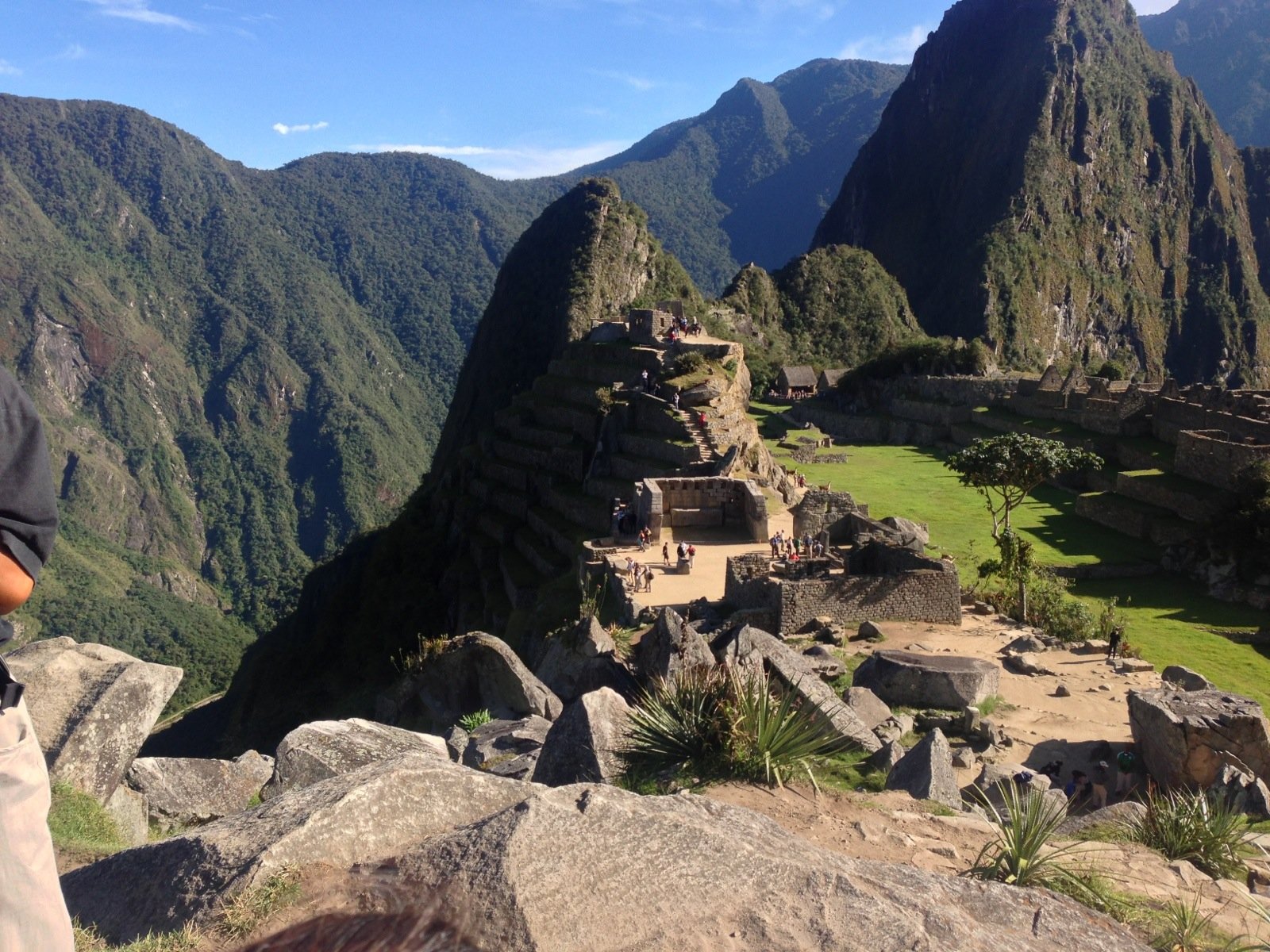
Centuries later, we are still very good at describing construction as conquest: cutting into a hill, clearing a site, imposing a plan. The Inca achievement suggests another vocabulary. Build with the slope. Follow the water. Use the stone already present. Allow a building to belong to the land rather than merely occupy it. We call much of that modern sustainable design. They had already made it monumental.
The journey continued south to Lake Titicaca. On the Uros islands, reeds formed the ground, the houses, and the boats, with fresh layers added as the older ones returned to the water. On Amantaní, we stayed with Joaquín and his family, ate soup, rice, and vegetables in their home, and climbed towards Pachatata and Pachamama, the paired male and female temples on the hill.
That night there was a bonfire in the square, beer, half-remembered scouting songs, and a spirited attempt at “Copacabana.” The stars were sharp above us. The doors did not quite seal, the cold arrived efficiently, and the toilet was outside. Mum’s original assessment retained its force.
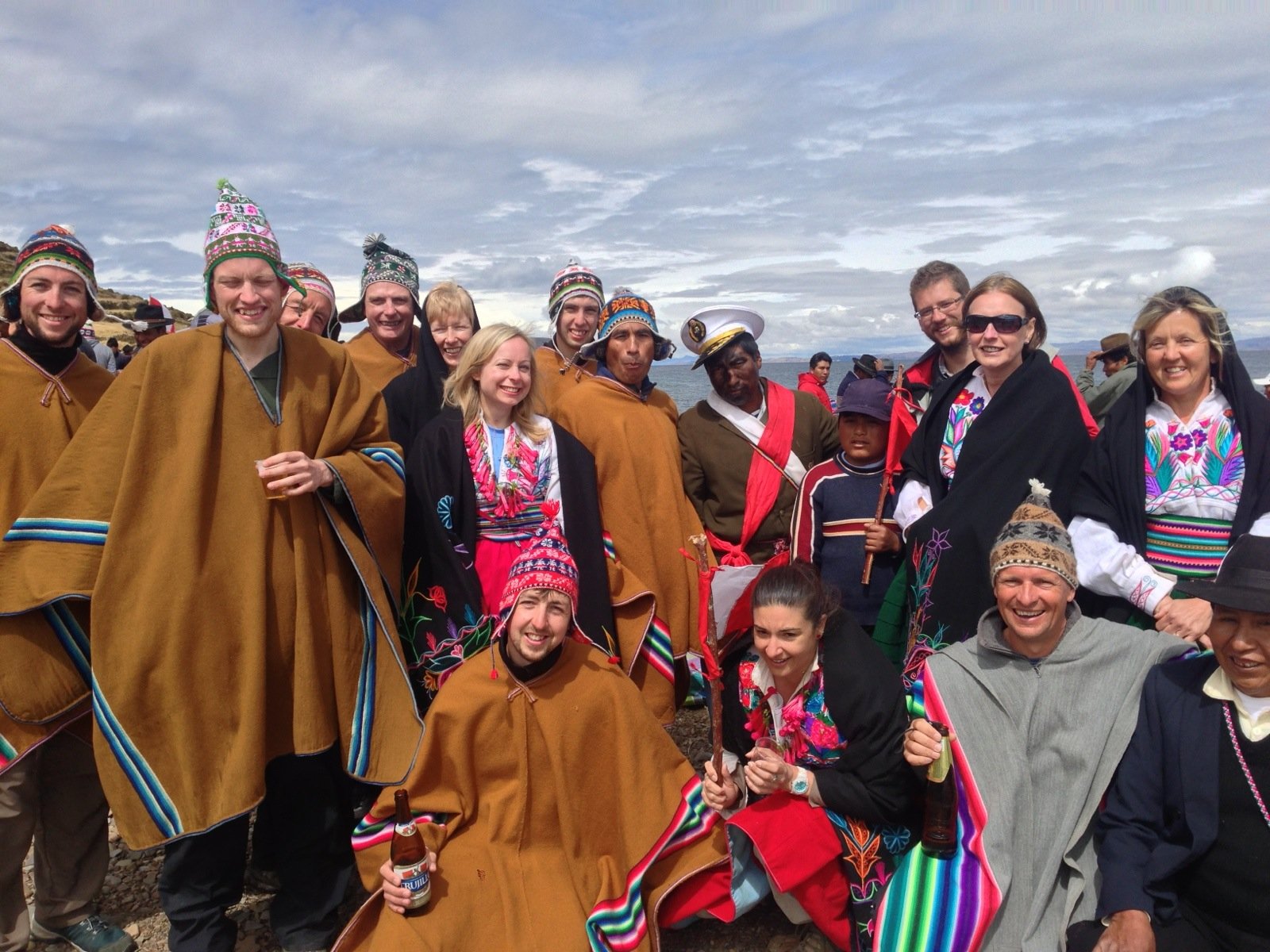
We had crossed an unreasonable amount of the planet to be there: some from Hong Kong, some from the UK, all of us gathered in Peru for Dad. The distance mattered, but so did the pace at which the country made us travel once we arrived. On foot, short of breath, and following a path cut centuries before us, the landscape stopped being the space between destinations.
It was the destination. The mountain was already there.
In postscript; thanks to Apple for iCloud backup, we left Titicaca one iPhone short, but the photos remained in tact.