I arrived in Madrid wanting three things: a shower, somewhere to charge my phone, and enough time to become a different person before the next flight.
The shower was a practical concern. I had flown from Hong Kong, barely slept, changed planes in Frankfurt, and reached Europe wearing the accumulated atmosphere of several airports. The phone was more complicated. It held my map, my notes, and the increasingly optimistic belief that a small solar charger might sustain an entire journey.
I was travelling onwards, but Madrid had placed twelve hours between me and everybody else. My family would arrive later. For now, I was on my own, carrying a slightly sore back, an iPad, and the uneasy pleasure of having nobody to consult.
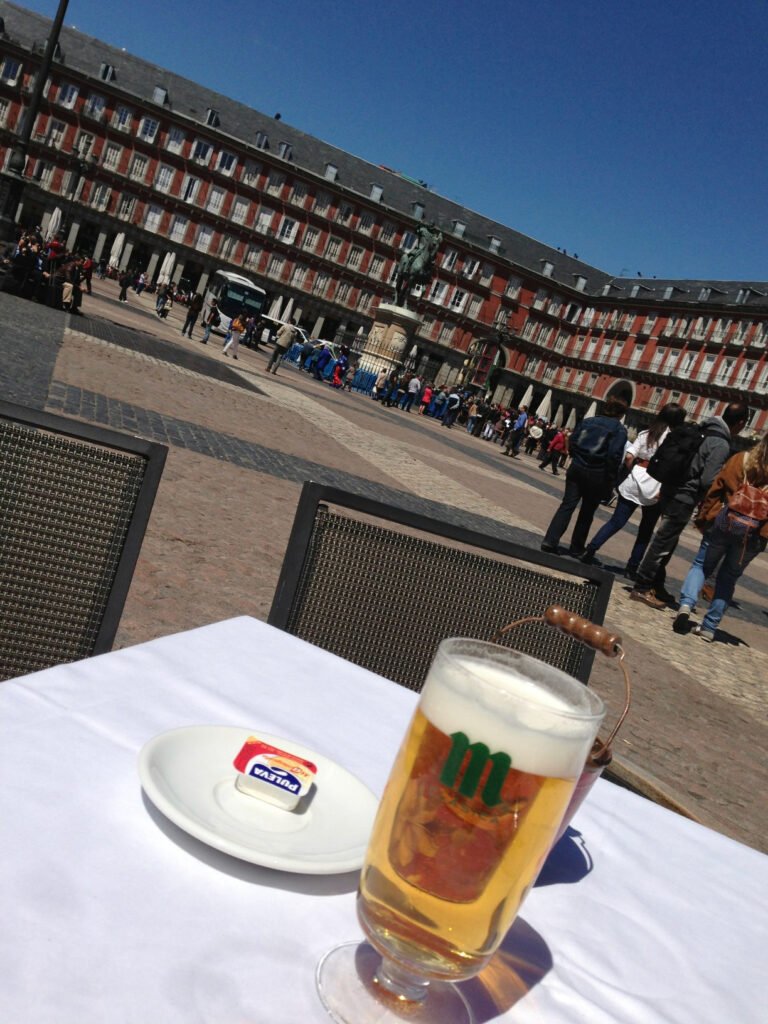
By late morning, I was sitting in Plaza Mayor.
The square looked complete in the way great European squares often do, as though the surrounding city had been added afterwards. Cafés ran beneath the arcades, painted figures occupied the façade of the Casa de la Panadería, and narrow streets slipped away from the corners with the quiet promise that getting lost would not constitute an emergency.
I knew almost nothing about its history. A passing thought had it as the old centre of government—not a fact so much as confidence wearing a borrowed jacket. I meant to look it up later, then did the more useful thing and kept looking.
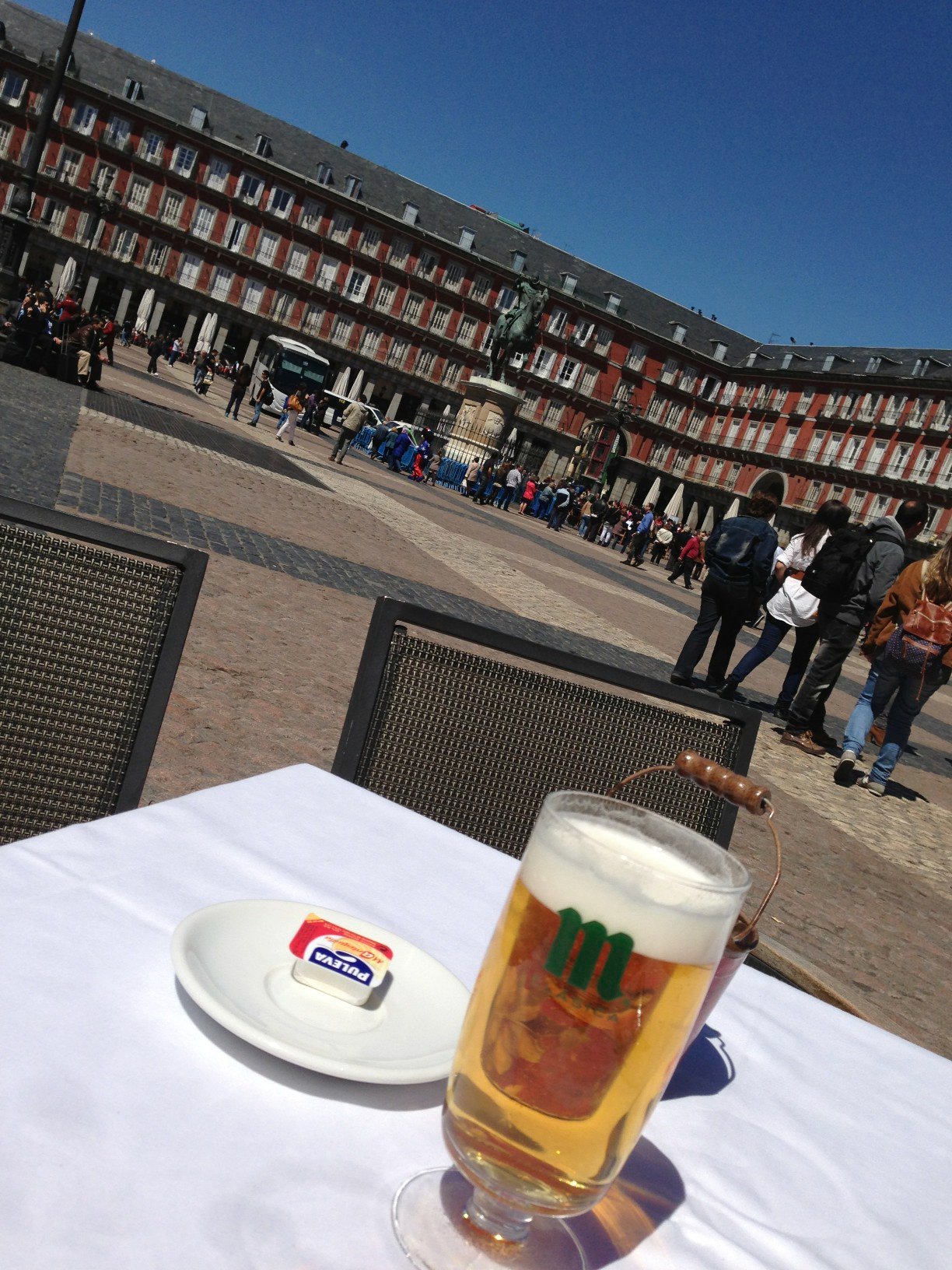
A beer in Plaza Mayor, Madrid — 3 May 2013, 11:50.
The photographs tell a second version of the day. The fragments I put down at the time are restless, full of questions that arrive and disappear before they can become conclusions. The camera does something different. It keeps finding order: arches, repeated windows, painted figures, and streets held neatly inside other streets. Even while my thoughts wandered, I was making frames.
That may be part of what art does for me. It does not necessarily provide an answer. It gives the eye somewhere to settle while the rest of the mind continues making a mess of things.
There is a particular freedom in arriving somewhere alone for only a day. You cannot complete the city, so the obligation disappears. There is no committee discussion about lunch, no person walking half a pace behind because you have again mistaken wandering for a route, and no negotiation over whether another church is necessary.
I began walking.
At Mercado de San Miguel, the day tightened into glass, iron, food, and people making much better decisions about lunch than I was. The structure was practical, but hardly content to look practical. Iron became pattern, glass turned the people and produce inside into part of the display, and the building made buying lunch appear curiously theatrical.
From there I moved towards the Royal Palace, Plaza de Oriente, and the broad, pale geometry of buildings designed to make the individual feel appropriately temporary. I kept photographing the decisions somebody else had made centuries earlier: a line of windows, the balance of a façade, a statue given precisely enough space to hold its ground. Art, architecture, and authority were difficult to separate. Perhaps that was the intention.
Madrid was generous with thresholds: a market opening into a square, a narrow street releasing me in front of a palace, a garden waiting behind stone. Every time I thought I understood the scale of the city, another space unfolded.
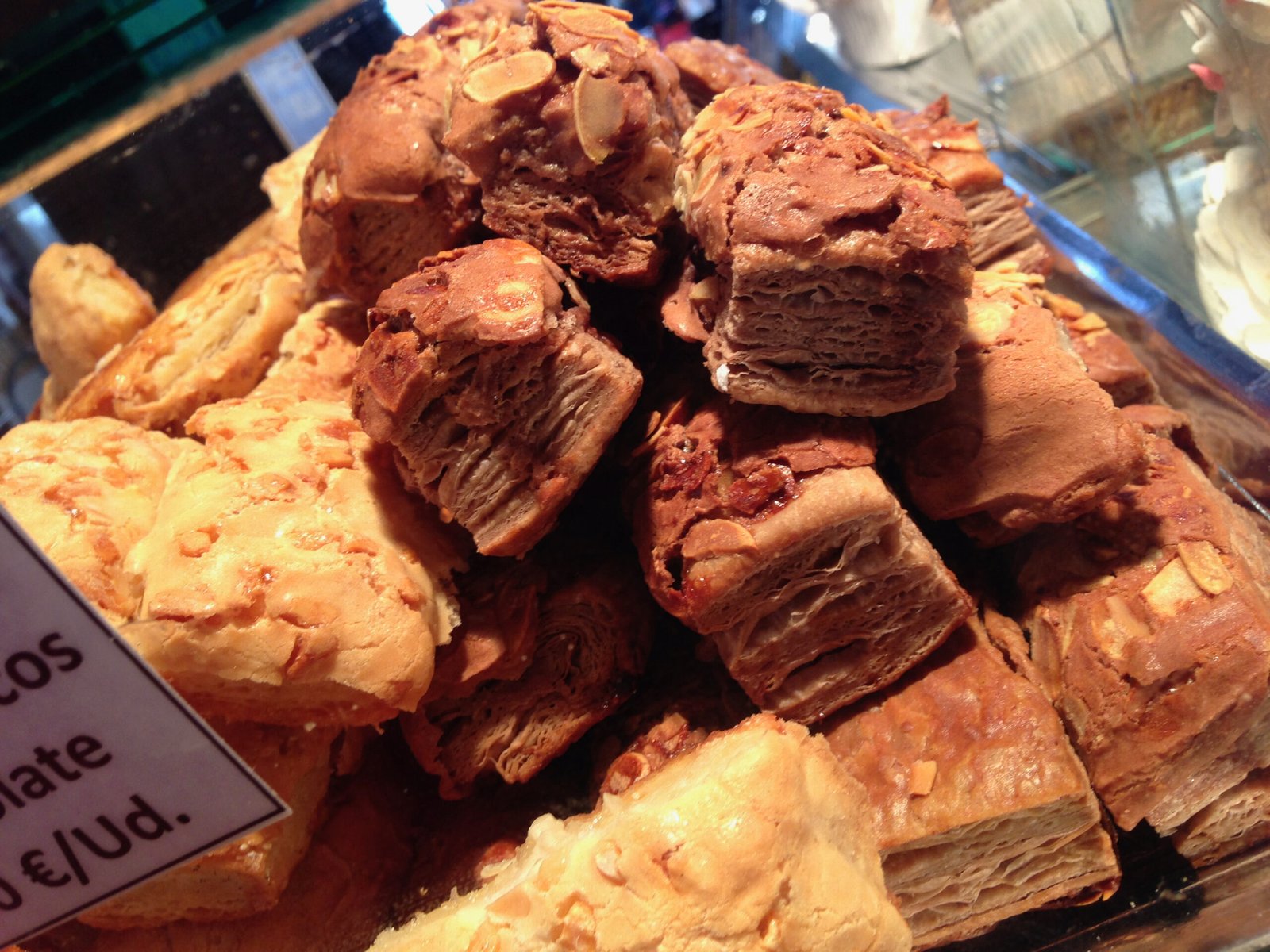
Pastries at Mercado de San Miguel, Madrid — 3 May 2013, 13:25.
I passed the palace and continued towards the Temple of Debod. An ancient Egyptian temple in the middle of Madrid should have felt misplaced. Instead, it seemed to make a quiet case that cities are built from things carried across distance: stone, food, language, people, and ambitions that began elsewhere.
The photographs hold the temple against open sky rather than trying to detach it from Madrid. I like that. However ancient or significant an object may be, we always encounter it in the present, surrounded by the weather, the city, and whomever has wandered into the edge of the picture. Context is not an interruption of the art. It becomes part of it.
I had crossed several time zones to reach it and was heading across more. The temple had travelled rather farther and complained less.
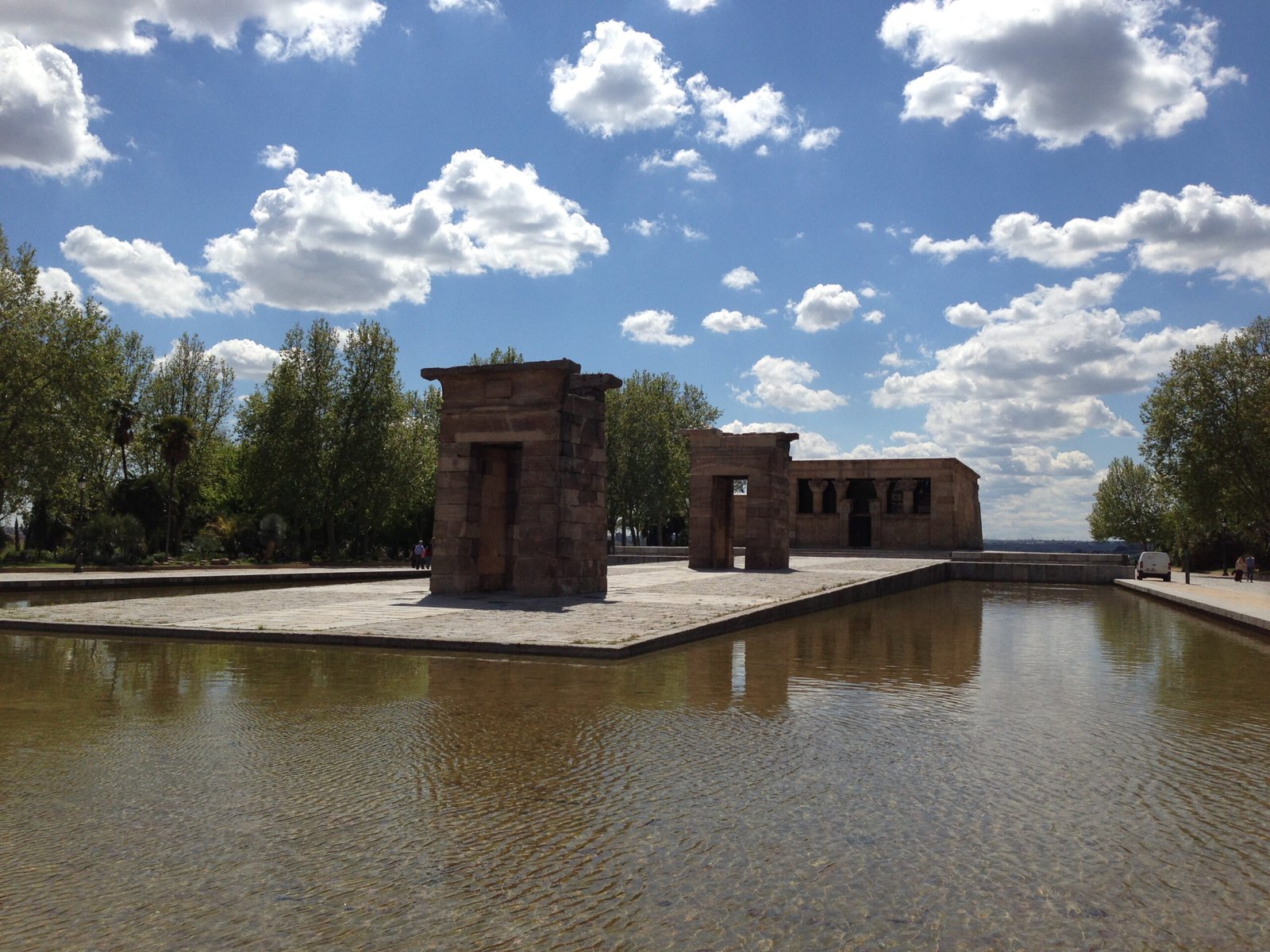
The Temple of Debod, Madrid — 3 May 2013, 15:05.
The walking continued through the afternoon: Almudena Cathedral, the streets around La Latina and Cortes, then towards the Prado and the Royal Botanic Gardens. I skirted the museum rather than attempting to consume it in the remaining hours. Madrid had already put more art outside than I could sensibly absorb: façades, sculpture, ironwork, gardens, and the arrangement of one building against another.
My photographs show a route more coherent than the one I remember. They move from formal squares and monumental stone into planting, shade, and smaller details. Memory has reduced the same journey to stone, trees, sun, and the sensation of not having enough time.
The gardens slowed me down. They were art of another kind: nature arranged, labelled, bordered, and persuaded to follow paths, but never entirely brought under control. After palaces, plazas, and façades, there was relief in something beautiful that could continue growing past the original design. Leaves moved, people sat, and the city briefly lowered its voice.
That was when the day became less about Madrid and more about the fact that I was alone in it.
Somewhere along the route came the thought that I needed to do this more often. Not travelling, precisely, but wandering without having to perform the experience for anybody else. Other questions flickered around it: where my head was, what made me happy, and whether happiness was something another person could locate on my behalf.
Madrid did not answer. It gave me somewhere attractive to ask.
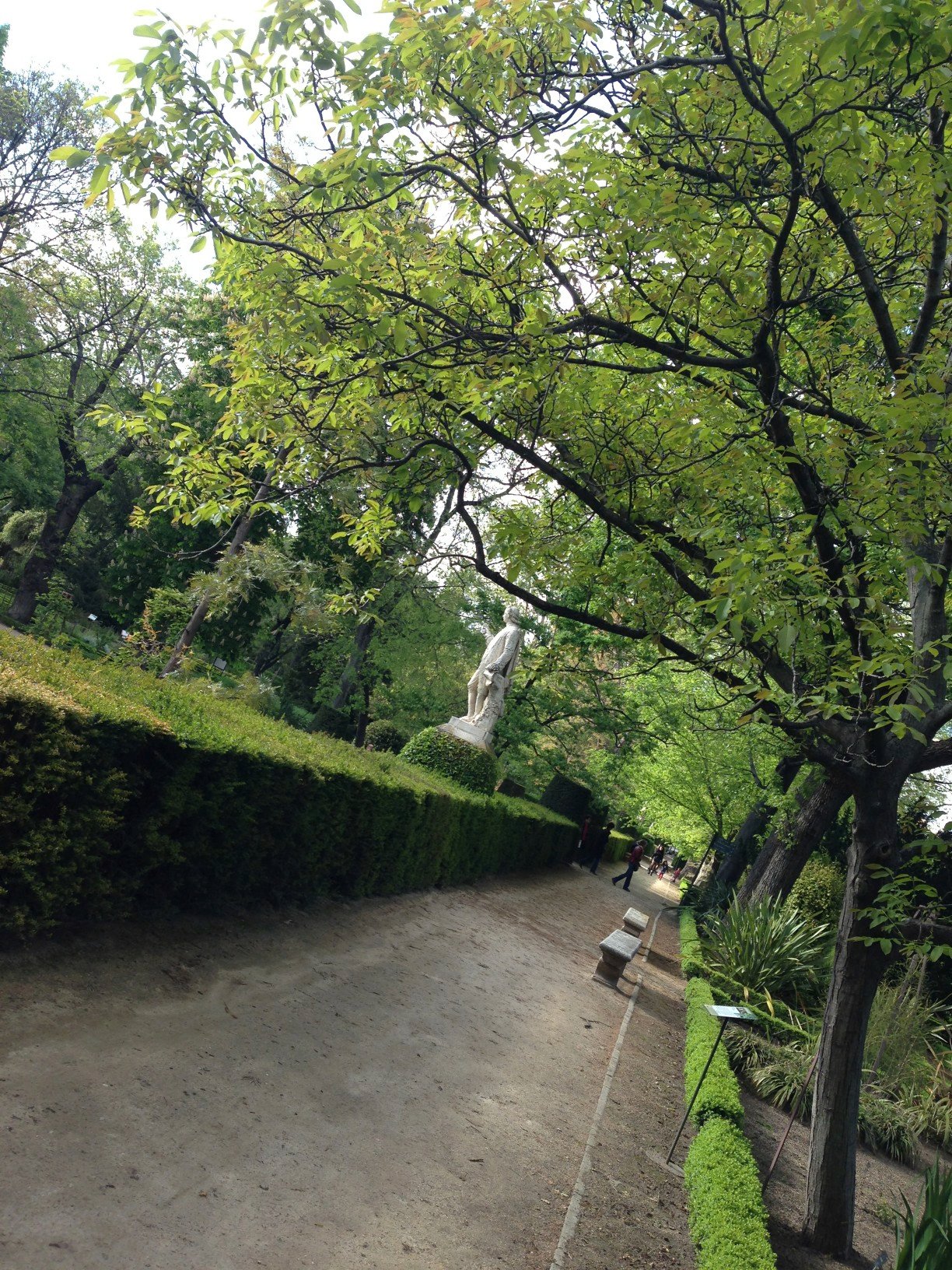
A shaded path through the Royal Botanic Gardens, Madrid — 3 May 2013, 17:40.
By early evening, I was in a small place I had down as the Trinity Tavern, eating a slice of baguette with tomato and canned tuna, and drinking rosé. In the moment, I promoted it to a local delicacy with the fearless authority of somebody who had been in Spain for less than a day.
It was excellent.
The place seemed to be run by a father, mother, and son, and frequented by people who knew one another. I wished I spoke Spanish. This is one of travel's more reliable humiliations: to be surrounded by an ordinary conversation and realise that the life of the room is happening perfectly well without you.
Still, I was smiling.
For a moment, I wanted all the money in the world so that I could travel and learn more about it. Almost immediately came the qualification: I would need enough discipline to put something down. Even then, the fantasy came with administrative conditions.
The light changed, and I walked on through Chueca and towards Cibeles. The later images loosen with the day. The compositions are no longer only monuments and formal spaces; streets, signs, people, and evening light begin to take over. The officially beautiful city gives way to the lived one.
It became more social as I became more tired. Tables filled. People met after work. Madrid moved into its evening while I remained between one part of a journey and the next.
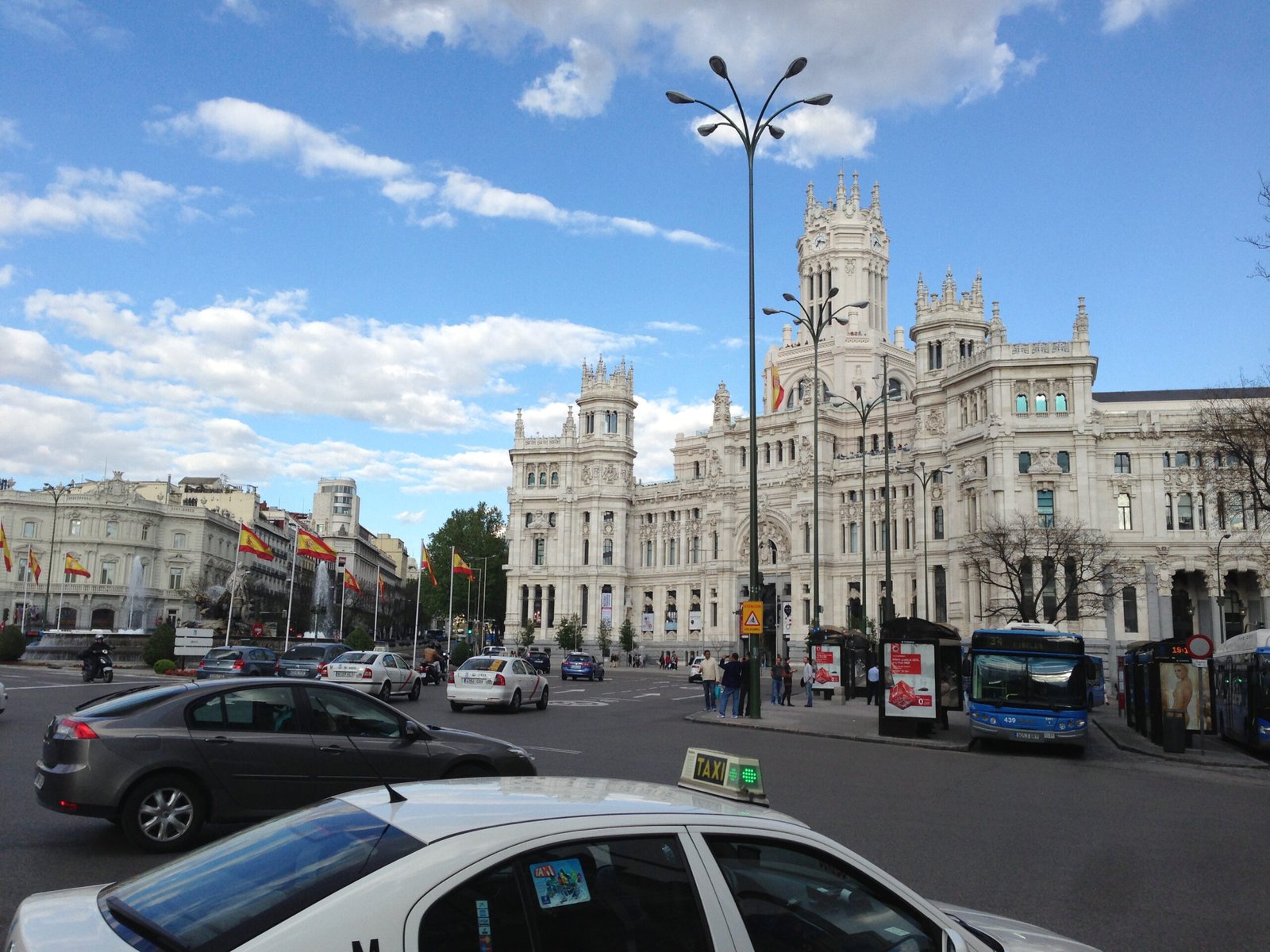
Plaza de Cibeles, Madrid — 3 May 2013, 18:18.
Later, my family appeared at the airport, and the larger expedition gathered around me. There would be mountains, rain forest, altitude, porters, a birthday cake, and plumbing of variable ambition. Peru was the adventure we had travelled across the world to undertake. Madrid had happened in the space before it.
Madrid had been a day of my own.
Not because I had discovered anything secret, or because a single day had made me an authority on the city. I had moved through it with very little plan and no companion to steady the narrative. I had sat in a square, walked until the map became unnecessary, photographed whatever made me stop, eaten something simple, and briefly considered moving to Spain on the strength of an attractive afternoon.
The next adventure would be shared, scheduled, guided, and measured in mountains. This one had lasted a few hours and required only that I keep walking.
That seems excessive now.
At the time, it felt entirely reasonable.